Funnel Analysis
Analysing conversion by product variant
Define a variant conversion denominator using identified, available options and matched orders, with clear treatment of later purchases.

Archive
Funnel Analysis
Define a variant conversion denominator using identified, available options and matched orders, with clear treatment of later purchases.
Funnel Analysis
Count product pairs in qualifying orders, compare directional rates and shortlist useful combinations for a measured trial.
Revenue Analytics
When several platforms claim credit for one order, adding their reported revenue can exceed the store's actual sales.
Measurement Planning
Use product pairings, recommendation results, category routes and onsite search evidence to guide merchandising decisions.
Data Quality
Compare observed experiment units with the planned split, trace where imbalance begins and decide whether the store-test result can be used.
Data Quality
Audit item IDs from product view through purchase. Find parent and variant switches, missing IDs and catalogue mapping changes.
Event Tracking
Replay affected shopping journeys, inspect event details and monitor tracking after a theme or app update.
Measurement Planning
Choose store-test guardrails from plausible harms, with the right denominator, timing, data source and response rule.
Measurement Planning
Choose ecommerce metrics by linking each business decision to a counting unit, comparison, owner and action.
Funnel Analysis
Compare category routes from a defined entry task to relevant products, with clear counting rules and path-analysis limits.
Funnel Analysis
Assign customers from their first-order products and compare observed value at the same age without hiding multi-item orders.
Attribution
First-touch and last-touch reports answer different questions.
Measurement Planning
Compare issued variant forecasts with qualifying orders, flag stock-constrained periods and read forecast errors within their limits.
Funnel Analysis
Compare funnel progression across devices and traffic sources while keeping segment definitions, source scope and cross-device limits clear.
Measurement Planning
Compare product-view and purchase counts, identify when a viewer-to-buyer rate is possible, and investigate gaps without mislabelling the measure.
Attribution
Define buyer groups, use equal follow-up windows and interpret repeat purchasing without mistaking selection for a promotion effect.
Funnel Analysis
Compare distinct repeat buyers across acquisition cohorts using a fixed follow-up window and clearly defined source labels.
Data Quality
Join variant order lines to dated orderability intervals and keep uncertain stock periods visible before comparing sales rates.
Funnel Analysis
Compare observed ecommerce value for acquisition-labelled cohorts at equal age, then decide which gap needs investigation.
Measurement Planning
Write a store-test brief that fixes eligibility, assignment, the conversion formula, decision threshold and end rule before launch.
Event Tracking
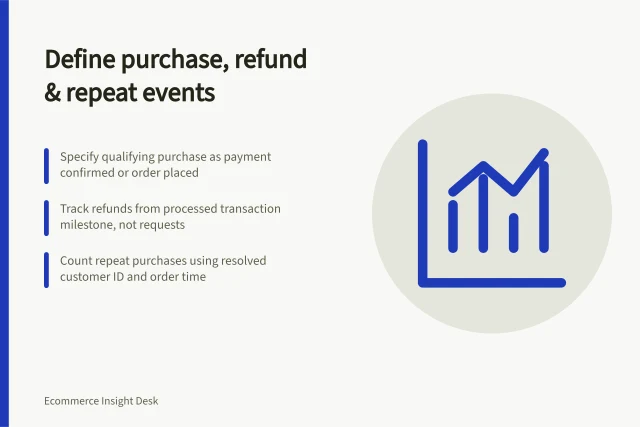
Define qualifying purchases, processed refunds and repeat customers with clear order, timing and identity rules.
Data Quality
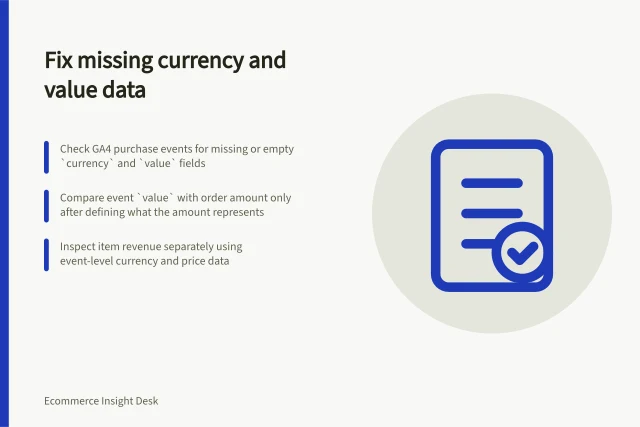
Check purchase events for usable currency and value fields, distinguish genuine zeroes from missing data, and trace exceptions to orders.
Funnel Analysis
Check variant orderability, visibility and observed interest before deciding that low ecommerce sales reflect weak demand.
Attribution
Attribution assigns credit for an order to marketing interactions under a chosen rule.
Measurement Planning
Set owners, review periods and change records that keep ecommerce reports useful as data and systems change.
Funnel Analysis
Define shopping funnel stages and counting rules, then use stage gaps to guide investigation without mistaking them for checkout failures.
Attribution
Structure a customer value report around recorded orders, comparable observation windows, clear amount rules and visible limitations.
Measurement Planning
An ecommerce dashboard should help a team decide what to do today and explain what happened after the numbers settle. Start with decisions, definitions and data …
Data Quality
Check the definitions, completeness, consistency and freshness of ecommerce data before using store reports to make decisions.
Event Tracking
Define ecommerce event triggers, item and order IDs, purchase rules and checks before relying on store reporting.
Measurement Planning
Plan an ecommerce experiment around a clear decision, eligible shoppers, one primary outcome, guardrails and a trustworthy result.
Measurement Planning
Plan ecommerce measurement around business decisions, clear metric definitions, source records and a review cycle.
Revenue Analytics
Read store revenue and margin together by defining eligible orders, discounts, reversals, cost coverage and reporting dates.
Funnel Analysis
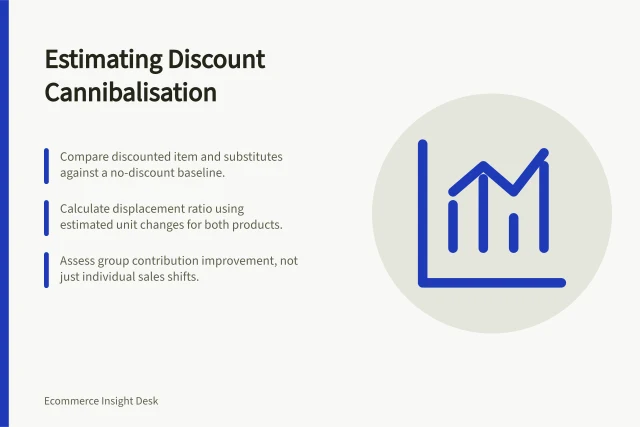
Estimate whether a discounted product displaced nearby items by comparing product and group outcomes against a stated baseline.
Measurement Planning
Reconstruct observed customer value from qualifying orders, a fixed time window, later adjustments and the original entrant count.
Data Quality
Classify simulated and real test orders, apply report exclusions consistently, and understand the limits of internal-traffic filters.
Revenue Analytics
Screen high-selling products for weak margin using comparable retained sales, dollar profit, cost coverage and adjustment dates.
Revenue Analytics
Understand how gross product sales become net sales, with checks for discounts, reversals, tax, delivery, order status and dates.
Measurement Planning
Define a completed purchase, resolve customer identities and assign first-purchase cohorts without confusing first-order date with payment confirmation.
Data Quality
Separate short follow-up, missing earlier orders, uncertain identity and unsettled adjustments in customer-value reports.
Data Quality
Find onsite searches with empty or weak results, inspect the products shown and choose a measured fix.
Attribution
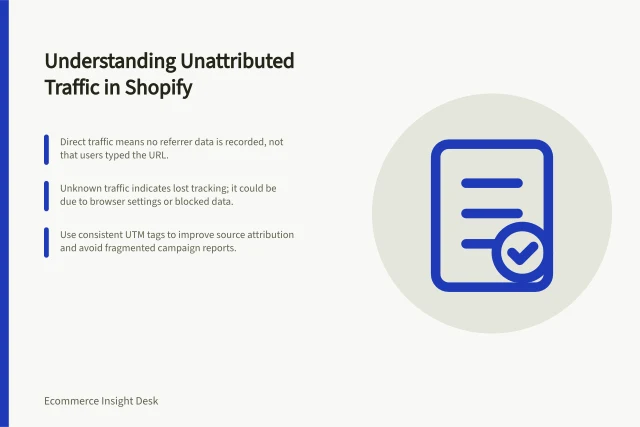
“Direct” and “unknown” are reporting labels, not customer motivations.
Data Quality
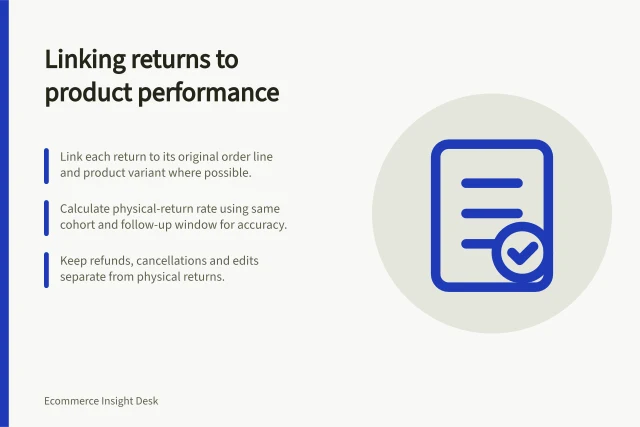
Link recorded physical returns, reasons and product-value reversals to original order lines using comparable follow-up windows.
Measurement Planning
Maintain metric formulas, owners and effective dates so report users can reproduce store figures and recognise definition changes.
Event Tracking
Map product, basket and checkout actions to precise ecommerce event triggers, including express routes and skipped steps.
Revenue Analytics
Reconcile sale-event orders, discounts, returns and costs without double-counting orders or treating an early result as final.
Attribution
The cheapest first order is not necessarily the best acquisition.
Funnel Analysis
Calculate shopping-stage drop-off with consistent counts and clear denominators, then check skipped routes and missing events.
Revenue Analytics
Define and count observed unavailable-variant actions while keeping later purchases and unobserved demand separate from lost sales.
Attribution
Separate recommendation exposure and clicks from sales effect, then compare eligible groups on a defined commercial outcome.
Measurement Planning
Protect ecommerce trends during an analytics migration with saved definitions, overlap checks and clearly labelled breaks.
Event Tracking
Control repeated purchase tracking with one order milestone, stable transaction IDs and coordinated sends; trace where duplicates begin.
Measurement Planning
Compare product interest, purchases, retained sales, margin and physical returns with clear units, time periods and cost coverage.
Measurement Planning
Assess an ecommerce promotion through retained sales, contribution, customer and product effects, and an estimate of demand without the offer.
Revenue Analytics
Calculate observed cohort value per original customer, compare equal follow-up windows and separate recorded sales from projected spend.
Data Quality
Reconcile GA4 purchase value with store orders by aligning the order population, revenue metric, discounts, refunds, currency and dates.
Data Quality
Align event definitions and reporting periods, match purchase records when possible, and investigate gaps between measurement tools.
Measurement Planning
Every daily dashboard metric should answer a question or trigger an action. If it only fills space, move it to a detailed report or retire it.
Attribution
Write a store-test result with group rates, effect size, uncertainty, data checks, guardrails and a bounded decision.
Revenue Analytics
Calculate contribution from retained product sales, product cost and other variable costs while showing return treatment and missing-cost coverage.
Revenue Analytics
Separate observed customer value from forecasts, label scenario ranges correctly and assess estimates against later outcomes.
Data Quality
Review who can view or export identifiable store data, check effective permissions and record a decision for each grant.
Revenue Analytics
Set a monthly ecommerce finance handoff: agree the basis, preserve extracts, explain differences and record sign-off.
Funnel Analysis
Separate browsing exits, incomplete checkouts and recorded failures using funnel observations alongside order and payment evidence.
Measurement Planning
Product-page visits, add-to-cart events and checkout starts can warn of a change before sales settle. They are signals to investigate, not sales in another name.
Measurement Planning
Build a seasonal baseline for an ecommerce sale, show uncertainty in estimated uplift and plan a stronger comparison for the next offer.
Data Quality
A report without an update time can make yesterday’s incomplete data look final. Show when each source was last processed and whether the current period may still change.
Revenue Analytics
Read variant orders alongside orderable time and saleable stock before making replenishment, transfer or range decisions.