Funnel Analysis
Analysing conversion by product variant
Define a variant conversion denominator using identified, available options and matched orders, with clear treatment of later purchases.

Section
Funnel Analysis
Define a variant conversion denominator using identified, available options and matched orders, with clear treatment of later purchases.
Funnel Analysis
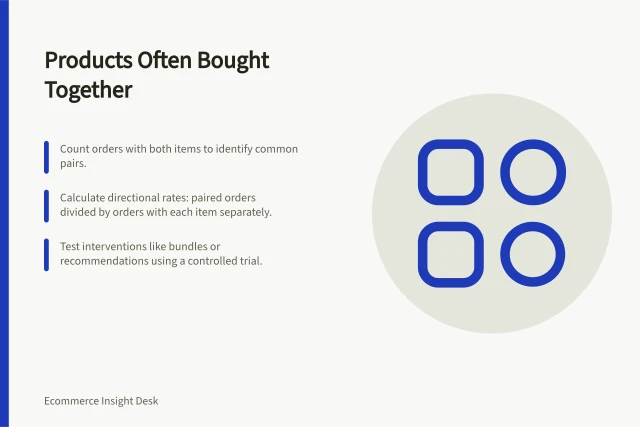
Count product pairs in qualifying orders, compare directional rates and shortlist useful combinations for a measured trial.
Funnel Analysis
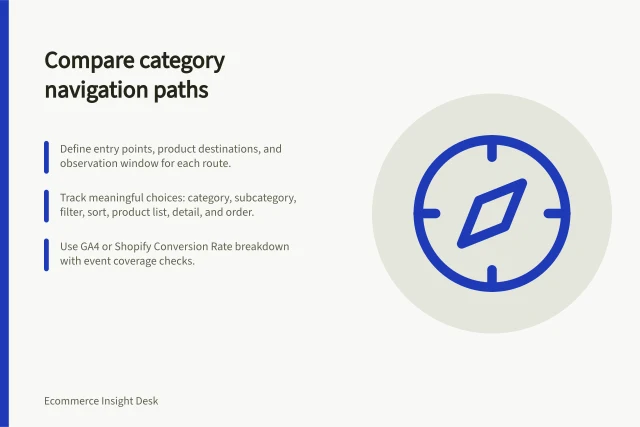
Compare category routes from a defined entry task to relevant products, with clear counting rules and path-analysis limits.
Funnel Analysis
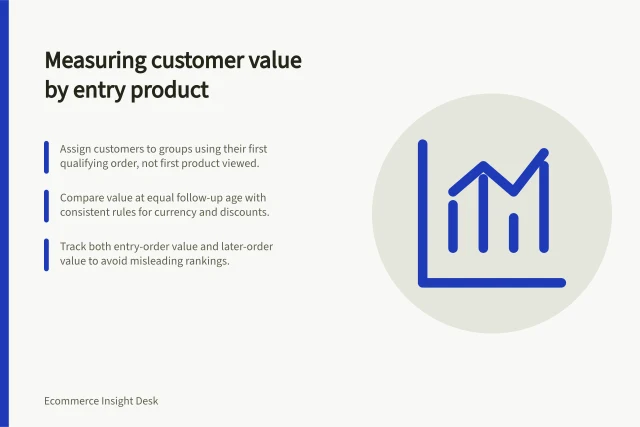
Assign customers from their first-order products and compare observed value at the same age without hiding multi-item orders.
Funnel Analysis
Compare funnel progression across devices and traffic sources while keeping segment definitions, source scope and cross-device limits clear.
Funnel Analysis
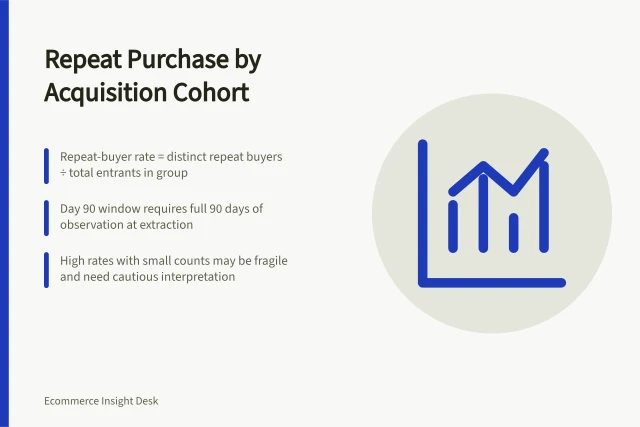
Compare distinct repeat buyers across acquisition cohorts using a fixed follow-up window and clearly defined source labels.
Funnel Analysis
Compare observed ecommerce value for acquisition-labelled cohorts at equal age, then decide which gap needs investigation.
Funnel Analysis
Check variant orderability, visibility and observed interest before deciding that low ecommerce sales reflect weak demand.
Funnel Analysis
Define shopping funnel stages and counting rules, then use stage gaps to guide investigation without mistaking them for checkout failures.
Funnel Analysis
Estimate whether a discounted product displaced nearby items by comparing product and group outcomes against a stated baseline.
Funnel Analysis
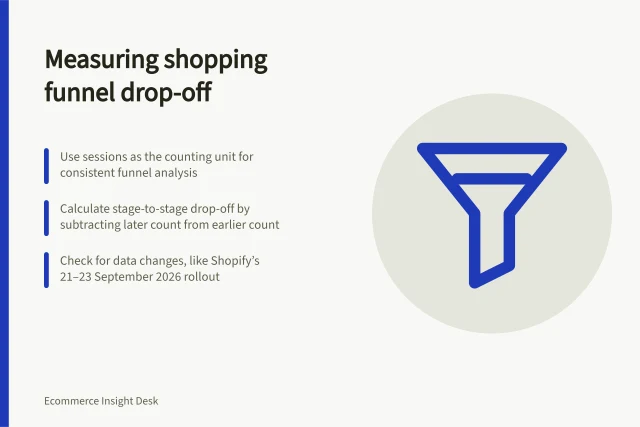
Calculate shopping-stage drop-off with consistent counts and clear denominators, then check skipped routes and missing events.
Funnel Analysis
Separate browsing exits, incomplete checkouts and recorded failures using funnel observations alongside order and payment evidence.