Funnel Analysis
Part of Ecommerce conversion funnels
Comparing funnels by device and traffic source
Compare funnel progression across devices and traffic sources while keeping segment definitions, source scope and cross-device limits clear.
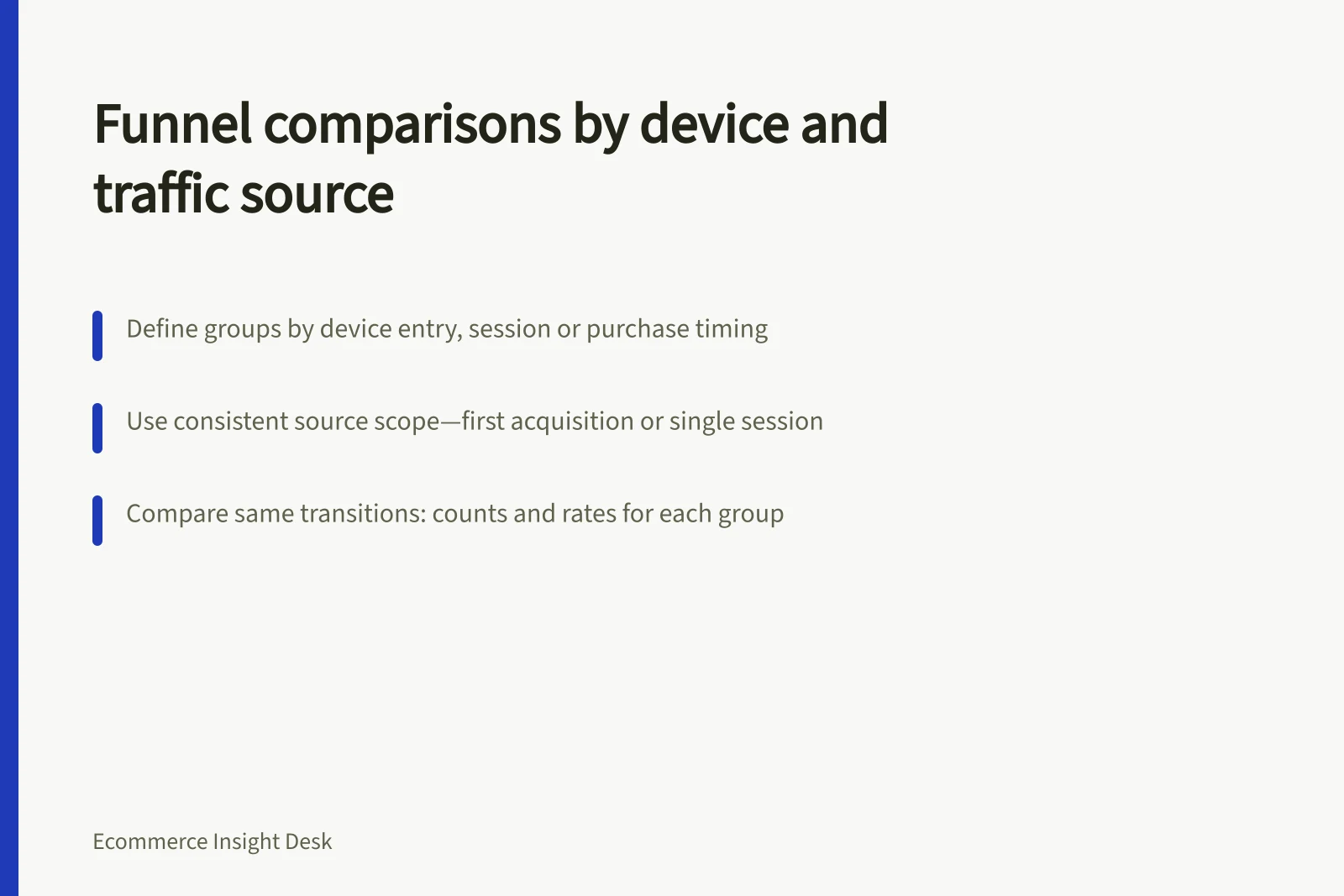
Compare device and traffic-source groups using the same funnel stages, dates, counting unit and entry rule. Show how many enter each group and the rate reaching the next stage. A difference points to an investigation, not proof that a device or source caused it.
Define the group
For device, decide whether the label refers to the device at funnel entry, within a session or at purchase. A shopper who switches devices can change this, so a group defined at entry is not the same population as one defined at purchase. Do not describe the two as interchangeable.
For traffic source, state the dimension's scope. Decide whether the source label is assigned at the shopper's first acquisition or to a single session, and apply that definition consistently.
A source defined at first acquisition describes an earlier visit, not the current one; do not label it as the source of the current visit. Keep unknown or unassigned traffic visible.
Shopify documents session-based Conversion rate breakdown, Sessions by device and Sessions by referrer reports. Those separate reports do not establish that their rows can be joined into one device-by-source funnel. Use a combined breakdown only when the reporting tool exposes the required stages and dimensions at the same counting grain.
Compare the same transition
For each group, show its starting count, the count reaching the next stage and the resulting rate. Then show the same transition for the comparison group.
If the decision concerns checkout, compare checkout entrants progressing to completion. A final purchase rate alone may hide where the groups diverge.
Check whether the groups entered with similar intent. Different landing pages, offers, product availability and proportions of new or returning shoppers can explain part of a gap. A mobile group may also contain a different mix of traffic sources. Make a second split only if the remaining counts are useful.
Check measurement and decide the next step
Look for route-specific missing events, consent differences and cross-device journeys before treating a segment gap as a store problem. For Shopify period comparisons crossing its 21–23 September 2026 session-measurement rollout, treat the update as a possible measurement break.
Identify the transition and population affected, inspect the relevant journeys, and consider competing explanations before changing the store. Source labels describe observed traffic under the chosen dimension. Funnel differences do not measure a channel's incremental sales.