Measurement Planning
Part of Ecommerce dashboard design
Separating leading indicators from confirmed outcomes
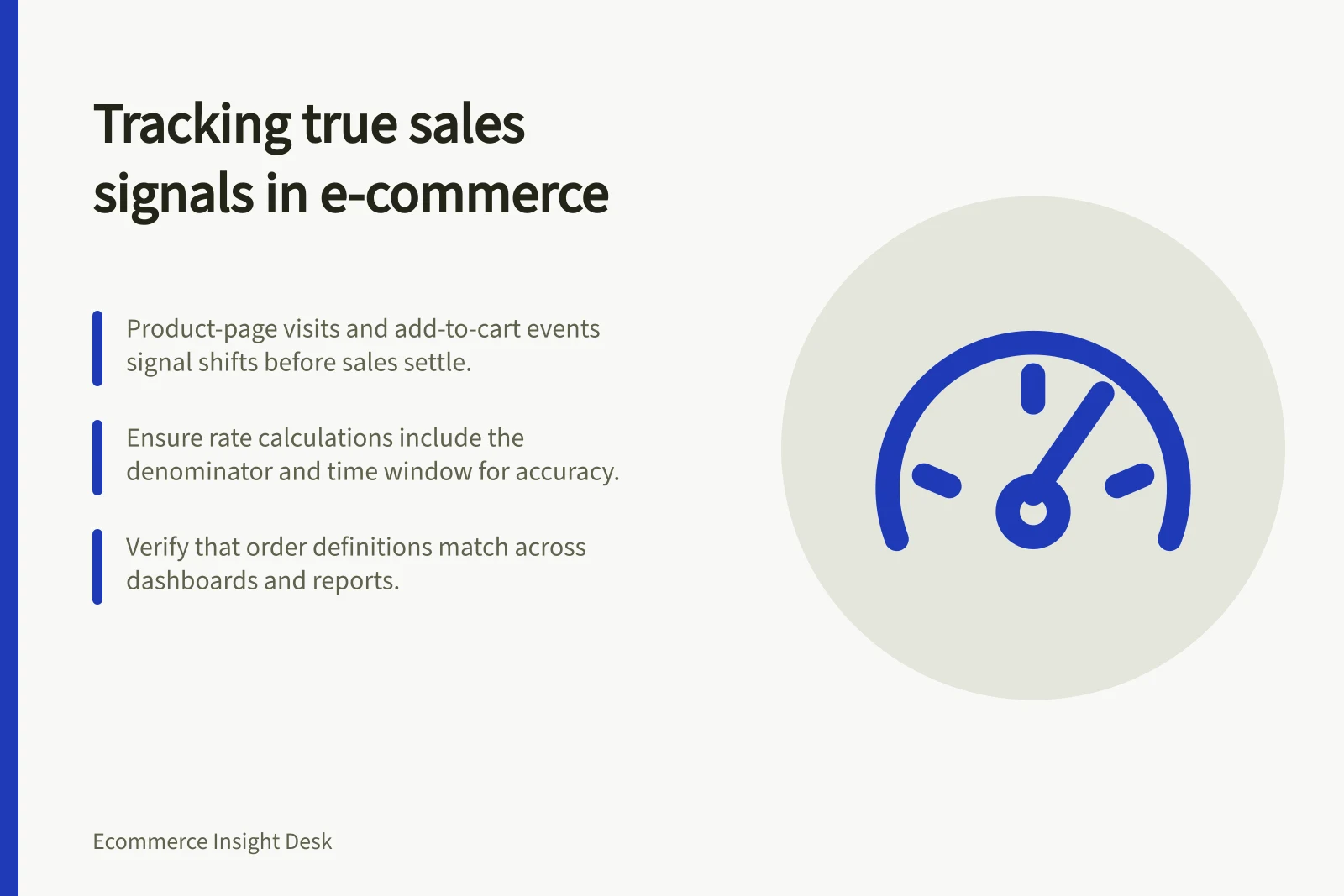
Product-page visits, add-to-cart events and checkout starts can warn of a change before sales settle. They are signals to investigate, not sales in another name.
Product-page visits, add-to-cart events and checkout starts can warn of a change before sales settle. They are signals to investigate, not sales under another name.
Group metrics by stage. Leading indicators show exposure and intent; operational measures show whether customers can complete the journey; outcome measures show orders, net sales or contribution after the relevant adjustments.
Display the denominator and time window for every rate. A higher add-to-cart rate from a tiny visitor group may be less meaningful than a stable rate across normal traffic.
Check that the signal and outcome use comparable definitions. Shopify notes that sales reports and order exports can differ, and that a date range may capture only one part of an order when the order and return fall on different dates. A same-day dashboard can therefore guide a check, while final commercial conclusions may require reconciliation.
For each signal, write the action it triggers. "Checkout starts fell while product visits held steady" might prompt a mobile checkout test.
If nobody can act or the signal repeatedly predicts nothing useful, move it out of the daily view. Do not label a campaign successful on engagement alone.
Key Considerations When Tracking E-commerce Signals
- Check data definitionsSales reports and order exports may differ – verify alignment
- Use comparable time windowsA same-day dashboard helps spot issues; reconciliation needed for final decisions
- Avoid false success signalsEngagement alone does not equal campaign success – act on insights, not just numbers