Attribution
Part of Promotion analysis
Comparing promotion buyers with ordinary customers
Define buyer groups, use equal follow-up windows and interpret repeat purchasing without mistaking selection for a promotion effect.
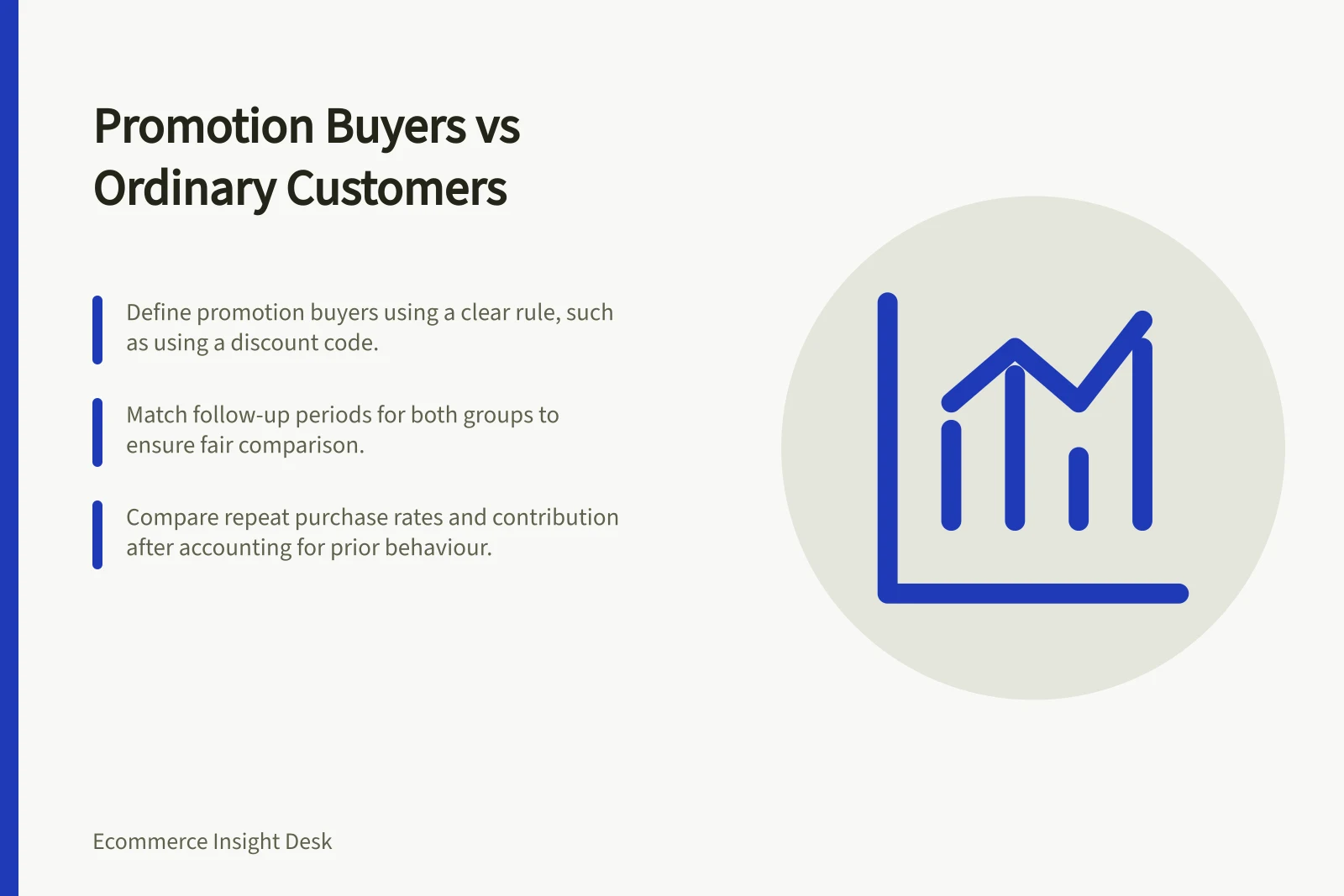
Define promotion buyers and the comparison group before measuring later purchases. Give both groups the same follow-up time. A difference in repeat sales describes the customers who bought; it does not by itself show that the promotion changed their behaviour.
Define the groups
A promotion buyer might have used a code, bought a sale-priced item or purchased while an offer was advertised. Choose one definition and state it. Keep customers who were eligible but paid full price separate from redeemers.
Define ordinary customers as a specific population, such as buyers without that offer during the same trading period, rather than everyone else in the database.
A customer can buy both ways. For a customer-level comparison, assign each person using a stated first qualifying order and count them once. Alternatively, analyse orders and label the result an order-level comparison.
If guest and account orders cannot be linked reliably, report that limitation rather than classifying every unmatched purchase as a new customer.
Shopify customer segments update as customers enter or leave under the segment rules. For a historical comparison, preserve the eligibility and purchase status at the chosen starting point instead of relying on a current segment list. Record the extract date and the rules used.
Match the follow-up
Separate new from returning customers. For repeat purchasing, start each customer's follow-up clock at their qualifying order and allow the same elapsed period. Include only customers old enough to have completed that window, or mark those with incomplete follow-up separately.
Show group sizes and relevant starting differences, including prior orders, product mix and exposure to other offers. Then compare outcomes that answer the business question: subsequent purchase rate, retained product sales after returns, contribution where costs are complete, and later purchases without a discount. Give the customer count behind each rate.
Eligibility itself can select different people. Shopify permits discounts to be restricted to markets, customer segments or specific customers. A promotion aimed at new customers should not be judged by simply comparing its buyers with established full-price buyers.
Interpret the comparison
Check category differences, return patterns and whether repeat buyers may have brought a purchase forward. Keep unknown purchase histories visible. Describe the observed difference and the main pre-existing differences that could explain it.
If the decision is whether to offer the promotion again, assign eligible customers to receive or not receive it before they buy, where practical. Compare all assigned customers under the same follow-up rules, including those who do not purchase; comparing only redeemers would reintroduce buyer selection. That planned comparison can support a stronger estimate than a retrospective split, provided exposure between groups is controlled.