Funnel Analysis
Analysing products commonly bought together
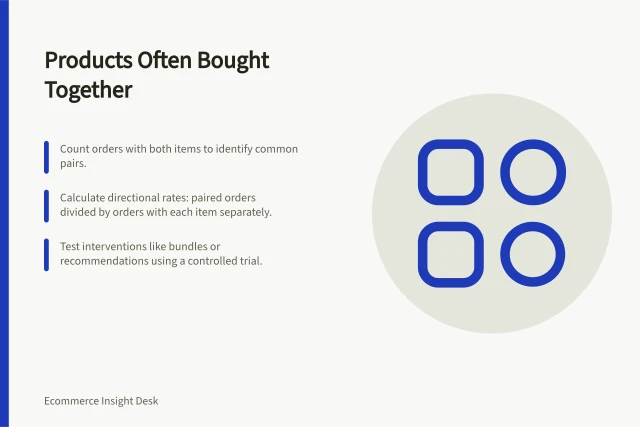
Count product pairs in qualifying orders, compare directional rates and shortlist useful combinations for a measured trial.

Desk
Looks at customer cohort analysis, value, attribution and experimentation practice for online retailers.
Funnel Analysis
Count product pairs in qualifying orders, compare directional rates and shortlist useful combinations for a measured trial.
Funnel Analysis
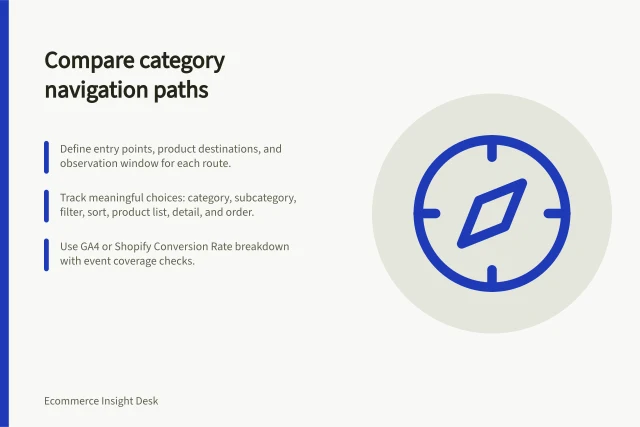
Compare category routes from a defined entry task to relevant products, with clear counting rules and path-analysis limits.
Funnel Analysis
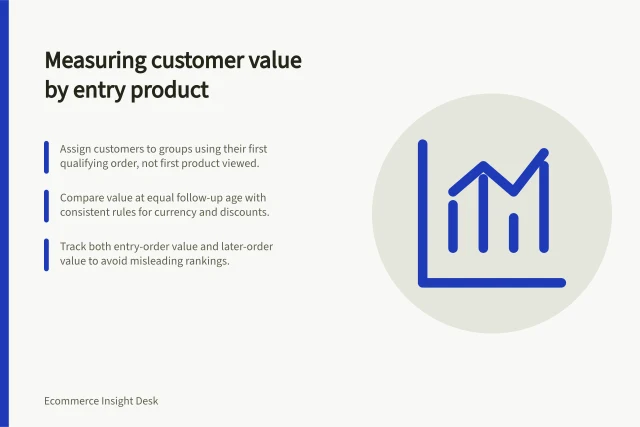
Assign customers from their first-order products and compare observed value at the same age without hiding multi-item orders.
Attribution
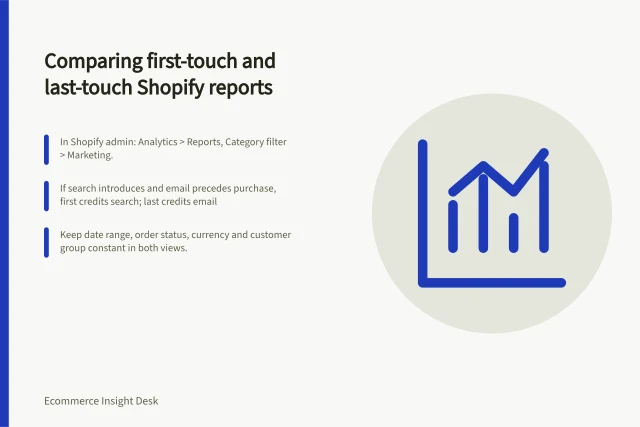
First-touch and last-touch reports answer different questions.
Funnel Analysis
Compare funnel progression across devices and traffic sources while keeping segment definitions, source scope and cross-device limits clear.
Attribution
Define buyer groups, use equal follow-up windows and interpret repeat purchasing without mistaking selection for a promotion effect.
Funnel Analysis
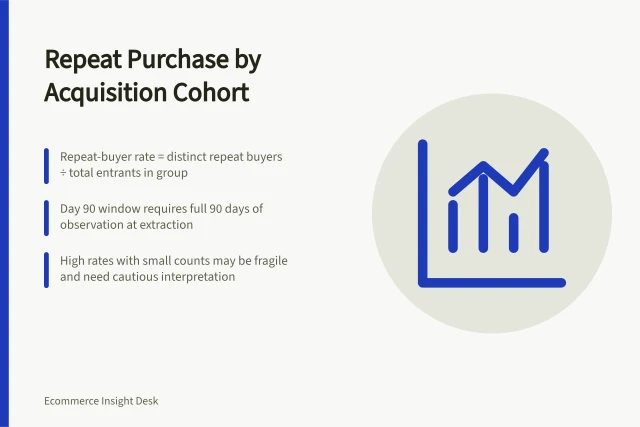
Compare distinct repeat buyers across acquisition cohorts using a fixed follow-up window and clearly defined source labels.
Funnel Analysis
Compare observed ecommerce value for acquisition-labelled cohorts at equal age, then decide which gap needs investigation.
Funnel Analysis
Check variant orderability, visibility and observed interest before deciding that low ecommerce sales reflect weak demand.
Attribution
Attribution assigns credit for an order to marketing interactions under a chosen rule.
Funnel Analysis
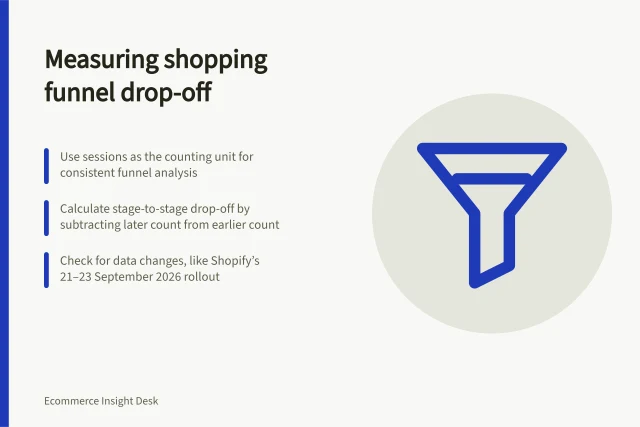
Define shopping funnel stages and counting rules, then use stage gaps to guide investigation without mistaking them for checkout failures.
Attribution
Structure a customer value report around recorded orders, comparable observation windows, clear amount rules and visible limitations.
Measurement Planning
Reconstruct observed customer value from qualifying orders, a fixed time window, later adjustments and the original entrant count.
Measurement Planning
Define a completed purchase, resolve customer identities and assign first-purchase cohorts without confusing first-order date with payment confirmation.
Attribution
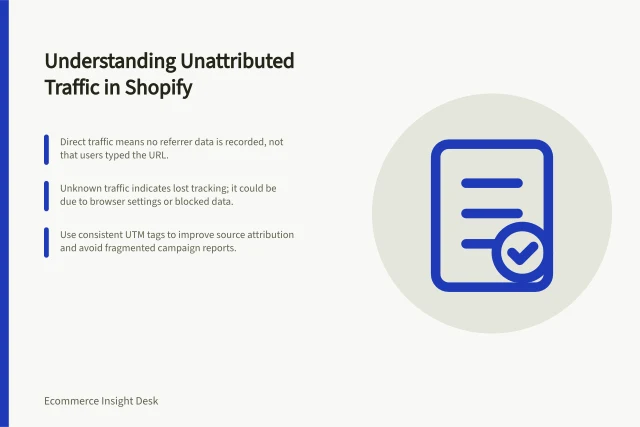
“Direct” and “unknown” are reporting labels, not customer motivations.
Attribution
The cheapest first order is not necessarily the best acquisition.
Funnel Analysis
Calculate shopping-stage drop-off with consistent counts and clear denominators, then check skipped routes and missing events.
Attribution
Separate recommendation exposure and clicks from sales effect, then compare eligible groups on a defined commercial outcome.
Revenue Analytics
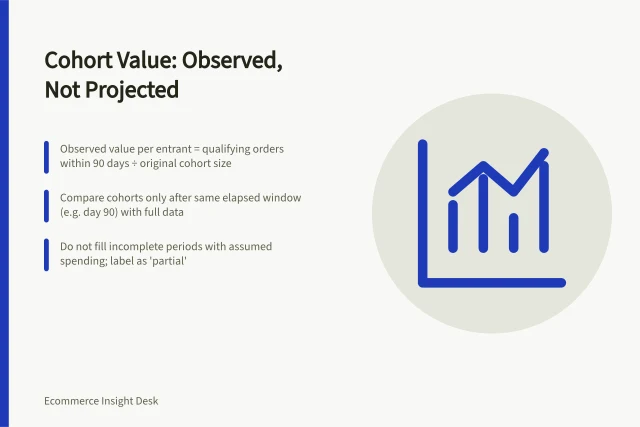
Calculate observed cohort value per original customer, compare equal follow-up windows and separate recorded sales from projected spend.
Attribution
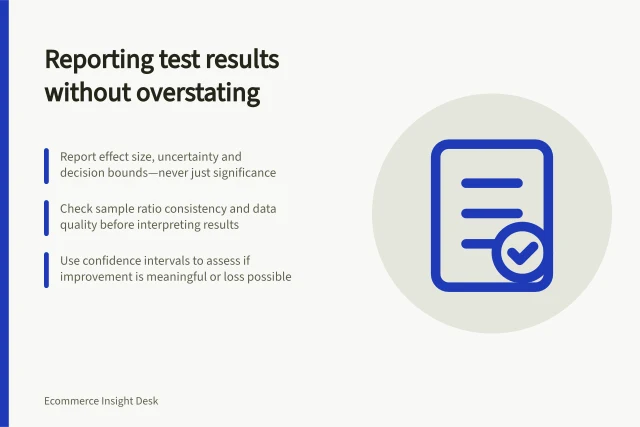
Write a store-test result with group rates, effect size, uncertainty, data checks, guardrails and a bounded decision.
Funnel Analysis
Separate browsing exits, incomplete checkouts and recorded failures using funnel observations alongside order and payment evidence.